Labels

Gistamania (49) Relationships (37) Entertainment. (18) Business (17) Entrepreneur (16) Inspiration (16) Technology (12) Leadership (11) Empowerment (9) Skills (8) Fashion (7) Education (5) Living Healthy (5)
Showing posts with label Empowerment. Show all posts

LESSONS FROM JIM CARREY: HOW I PERSIVERED

NEVER GIVE UP ON YOUR DREAM


"I wrote myself a cheque for $10 million for acting services rendered, gave myself five years and dated it thanksgiving 1995. I put it in my wallet and it deteriorated and deteriorated".

"Life opens up opportunities to you, and you either take them or you stay afraid of taking them".

When Jim was 12, his dad lost his job and all they had, including their house. Forcing them to live in a van for sometime. Jim and his dad had to work together as security guards to support the family. This privation continued unabated for years. Jim long had a dream of becoming a comic actor. So he moved from audition to audition without breaking even.

Then came the year 1990 and Jim Carrey 28, broke and frustrated decided to write himself a cheque. Jim, took up acting and went from year to year not seeing his dream accomplished. In 1994, he had what could be called a break into Hollywood with his role in Pet Detective and The Mask. Then just before thanksgiving 1995, Jim landed his breakthrough role in Dumb and Dumber and was paid $10 million for his role. Ever since then, Jim's subsequent movies have grossed over a billion dollars .

It is better to risk starving to death than surrender. If you give up on your dreams, what's left?

Friends, what are you committing your life to. What goal are you chasing or are you just drifting through life with no clearly defined goal. If you're to write yourself a cheque now, how much is it going to be and are you willing to pursue  your goal regardless. Are you willing to hang in there till its achieved or are you going to quit and throw in the towel. Five years from now, what will be the story of your enterprise, of your endeavor and ultimately your life.

"If you give up on your dreams, what's left". ~ Jim Carrey.

WORLD FAMOUS BREAK-THROUGH INDIVIDUALS WHO FAILED BEFORE THEY GAINED SUCCESS

FAMOUS FAILURES : ARE YOU AFRAID TO FAIL? 

Do you have challenges in achieving your your goal? 
Have been written off by others that you will amount to no good?
Are you under pressure to prove your worth, or get approval from people around you?

Don't be despaired, before you there has been great men and women who had suffered more, and has faced difficulty even from their childhood. 

ALBERT EINSTEIN:   


He wasn't able to speak until he was 4-years old
and his teachers said "he would never amount to much". Today you know his story.


Micheal Jordan:

After being cut from his high school basketball team,
he went home, locked himself in his room and cried. 

Today he is Celebrated worldwide.


Walt Disney: 


Fired from a newspaper for " lacking  imagination" and "having no original ideas"
Today you know about "Disney Land"


STEVE JOBS:


At 30-years old he was left devastated and depressed after being unceremoniously removed from the company he started.


OPRAH WINFREY: 

Was demoted from her job as a news anchor, because she "wasn't fit for television"


THE BEATLES: 

Rejected by Decca recording studios who said " we don't like their sounds, they have no future in show business.


If this people after their short-comings became world renown celebrities , then you too can make it and be famous.

" if you see failure as a stepping stone to achieving greatness rather than a setback , then you will make success an ornament around your neck that all will see, and reckon with." (Thomas Chiedozie Williams)"

GENERAL ELECTRIC VICE CHAIR GIVES LEADERSHIP TIPS

General Electric Vice Chair Beth Comstock Shares Her Leadership Tips


Beth Comstock, vice chair of GE, is the latest executive featured in The New York Times “Corner Office” column. In the following excerpt from the interview, she shares about her leadership style and tips for the Class of 2016.

A large part of your job is to drive innovation. What’s your best tip?


It really comes down to this thought: Permission granted. Having seen so many change situations in my career, change often starts with ourselves. Every company has people who don’t want to change the way things have been done.

But often people are looking for an alibi to not try something new. And maybe people themselves aren’t willing to do what’s required to make the change. So the message I try to convey is, you have the permission to try something new.

Another way to think of it is: don’t wait for the invitation. There are a lot of opportunities to grab. If you see a better way, you have an obligation to do it.

How do you hire?


I’m big these days on the quality of being able to figure things out. So if I’m interviewing someone, I like to understand their method for doing that. If I’m bringing them into a centralised role, they have to be able to navigate the company. There is no rule book for that, and they have to figure it out. They’ve got to connect with people inside the business, and with customers.

So I’ll usually test people on that. Give me an example where you didn’t have any rules, and what did you do? I’ll ask people how they solve their toughest problems. What was the toughest situation they ever encountered, and how did they deal with it?


What is your advice to new college grads?


I usually tell them their first job doesn’t determine their life. People often put too much pressure on that first job. Just try things out. Sometimes the seemingly worst assignments can be your best. What are you going to bring to it? What are you going to learn from it?

Read the full interview in The New York Times. 

Beth Comstock is Vice Chair of GE. 

OFFICE POLITICS: HOW TO BE IN THE GAME

BE A WINNER IN OFFICE POLITICS


Now that we have come to understand office politics, the question ism, how do we get involve in the game?

There are several habits involving office politics, it's important you get familiar with them to be able to win in the game.
"Office politics – a taboo word for some people. It’s a pervasive thing at the workplace. In it’s simplest form, office politics is simply about the differences between people at work; differences in opinions, conflicts of interests are often manifested as office politics. It all goes down to human communications and relationships.
There is no need to be afraid of office politics. Top performers are those who have mastered the art of winning in office politics:" QUOTE: LIFEHACK.


EXCERPT:


BE AWARE YOU HAVE A CHOICE


The most common reactions to politics at work are either fight or flight. It’s normal human reaction for survival in the wild, back in the prehistoric days when we were still hunter-gatherers. Sure, the office is a modern jungle, but it takes more than just instinctive reactions to win in office politics. Instinctive fight reactions will only cause more resistance to whatever you are trying to achieve; while instinctive flight reactions only label you as a pushover that people can easily take for granted. Neither options are appealing for healthy career growth.

Winning requires you to consciously choose your reactions to the situation. Recognize that no matter how bad the circumstances, you have a choice in choosing how you feel and react. So how do you choose? This bring us to the next point…

Re-Map the Organization Chart


Office Politics often circumvent the formal organization chart. Sit back and watch for a while and then re-map the organization chart in terms of political power.

Who are the real influencers?
Who has authority but doesn't exercise it?
Who is respected?
Who champions or mentors others?
Who is "the brains behind the organization"?


Build Relationships


Now that you know how the existing relationships work, you need to build your own social network accordingly.

Do not be afraid of politically powerful people in the organization. Get to know them.
Ensure you have relationships that cross the formal hierarchy in all directions (peers, bosses, executives).
Start to build relationships with those who have the informal power.
Build your relationships on trust and respect – avoid empty flattery.
Be friendly with everyone but don't align yourself with one group or another.
Be a part of multiple networks – this way you can keep your finger on the pulse of the organization.

KNOW WHAT YOU ARE TRYING TO ACHIEVE


When conflicts happens, it’s very easy to be sucked into tunnel-vision and focus on immediate differences. That’s a self-defeating approach. Chances are you’ll only invite more resistance by focusing on differences in people’s positions or opinions.

The way to mitigate this without looking like you’re fighting to emerge as a winner in this conflict is to focus on the business objectives. In the light of what’s best for the business, discuss the pros and cons of each option. Eventually, everyone wants the business to be successful; if the business don’t win, then nobody in the organization wins. It’s much easier for one to eat the humble pie and back off when they realize the chosen approach is best for the business.

By learning to steer the discussion in this direction, you will learn to disengage from petty differences and position yourself as someone who is interested in getting things done. Your boss will also come to appreciate you as someone who is mature, strategic and can be entrusted with bigger responsibilities.

Govern Your Own Behavior


Through observation you'll learn what works in your organization's culture and what doesn't. Watch other people at work and identify successful behaviors that you can model. There are also some general standards to observe that will stop negative politics from spreading.

Don't pass on gossip, questionable judgments, spread rumors – when you hear something, take a day to consider how much credibility it has.
Rise above interpersonal conflicts – do not get sucked into arguments.
Maintain your integrity at all times – always remain professional, and always remember the organization's interests.
Be positive – avoid whining and complaining.
Be confident and assertive but not aggressive.
When voicing objections or criticism, make sure you take an organizational perspective not a personal one.
Don't rely on confidentiality – assume things will be disclosed and so decide what you should reveal accordingly.
Be a model of integrity to your team, and discourage politics within it.

DON’T TAKE SIDES


In office politics, it is possible to find yourself stuck in between two power figures who are at odds with each other. You find yourself being thrown around while they try to outwit each other and defend their own position. All at the expense of you getting the job done. You can’t get them to agree on a common decision for a project, and neither of them want to take ownership of issues; they’re too afraid they’ll get stabbed in the back for any mishaps.

In cases like this, focus on the business objectives and don’t take side with either of them – even if you like one better than the other. Place them on a common communication platform and ensure open communications among all parties so that no one can claim “I didn’t say that”.

By not taking sides, you’ll help to direct conflict resolution in an objective manner. You’ll also build trust with both parties. That’ll help to keep the engagements constructive and focus on business objectives.

Understand the Informal Network


Once you know who's who in the organization, you have a good idea of where the power and influence lay. Now you have to understand the social networks.

Who gets along with whom?
Are there groups or cliques that have formed?
Who is involved in interpersonal conflict?
Who has the most trouble getting along with others?
What is the basis for the interrelationship? Friendship, respect, manipulation?
How does the influence flow between the parties?

KEY POINT: 

Learn to think in terms of “how can we both win out of this situation?” This requires that you first understand the other party’s perspective and what’s in it for him. Next, understand what’s in it for you. Strive to seek out a resolution that is acceptable and beneficial to both parties. Doing this will ensure that everyone truly commit to the agree resolution and not pay only lip-service to it.


Positive or negative – politics happens. The philosopher Plato said, "One of the penalties for refusing to participate in politics is that you end up being governed by your inferiors." And this hold true today in the workplace: If you don't participate in the political game, you risk not having a say in what happens and allowing people with less experience, skill or knowledge to influence the decisions being made around you.

Office Politics are a fact of life. Wise politicking will help you get what you want in the world of work without compromising others in the process. Learn to use its power positively while diffusing the efforts of those who abuse it.


OFFICE POLITICS: UNDERSTANDING THE GAME

KNOWING THE RULES 


By: Thomas Chiedozie Williams.


We all have come to that point where we are stock in the middle, and some of our colleagues whom just got into the organization not quite long have made their way to the top level, while others get away with certain things, like first hand info, bonuses, always with the top notch of the organization, this people know how to maneuver their way into any position or office in the organization.

"Office politics" are the strategies that people play to gain advantage, personally or for a cause they support. The term often has a negative connotation, in that it refers to strategies people use to seek advantage at the expense of others or the greater good. In this context, it often adversely affects the working environment and relationships within it. Good "office politics", on the other hand, help you fairly promote yourself and your cause, and is more often called networking and stakeholder management.

It is a heart breaking scene to see people step on others to achieve their goal, and also to see someone you are better off being recommended by your superior when it's supposed to be you, because of the relationship they have with them.

The bottom line is Office politics is something  you must get yourself involve in other to survive in the game, those who play office politics, knows exactly how to get what they want and how to get on." Whether you hate it, admire it, practice it or avoid it, office politics is a fact of life in any organization. And, like it or not, it's something that you need to understand and master to be sure of your own success

Where i work i have witness a series of office politics taken place, some years ago a group of young vibrant men came into the organization, this individuals changed everything because they where smart, they knew the odds and what kinds of game needed to be played, gained the trust of the CEO, this young individuals overthrew the current big shots and decision makers, brought in their own team, people who speak the same language with them,(people they are familiar with and trust) the older crew decided to form a team and watch, few years latter the table turned. i tagged this event as the Game of Thrones, where everyone is fighting to rule and remain on top.

In this kind of scenario you must be careful so you remain on the winning team you don't want to loose to both sides you must learn to maneuver your way through both teams, and influential individuals.

Understanding the kind of politics being played in your organization and knowing how to participate is key.


"Perhaps due to the negative connotation, many people see office politics as something very much to be avoided. But the truth is, to ensure your own success and that of your projects, you must navigate the minefield of Office Politics. If you deny the 'bad politics' that may be going on around you, and avoid dealing with them, you may needlessly suffer whilst others take unfair advantage. And if you avoid practising 'good politics', you miss the opportunities to properly further your own interests, and those of your team and your cause" (Quote: mindtools )
To deal effectively with office politics and use it yourself in a positive way, you must first accept the reality of it. Once you've done this, you then need to develop strategies to deal with the political behavior that is going on around you. The best way to do this is to be a good observer and then use the information you gather to build yourself a strong network to operate in.

is it possible to manage your boss?

HOW TO MANAGE YOUR BOSS

By: Thomas Chiedozie Williams


I conducted a research and the result turned out to be that, the major reason why some employees are not effective was their boss.

Your boss can be anyone you report to directly or indirectly.

The term itself,  "BOSS" is also someone who is higher than you in rank in the office.  How can you, a mere employee, be able to manage your boss and start a relationship with him? Well, there are different types of bosses that you might encounter in your lifetime.

Speaking from experience i once had a boss who was my direct line manager and HOD whom i report to and Another boss that is the M.D of the department.

The relationship i have with both of them differs, the MD has a personality which he has built over the years that everyone knows, even though if you are new in the organization and in another department, it wont take you a few days to reckon with his personality. talking of his personality, the MD is the kind of person who wants to be heard, and noticed and seen to have the final authority, he can embarrass you especially if you are not properly dressed to his taste, he prefers you dress straight up strictly professional and corporate looking whether it's a day for casual wears or not, he talks loud and is goal oriented and will drive you to the extreme to achieve whatever target is set before you, he doesn't listens to opinions and is quick to pass judgment without a second thought. if you work directly under him you will be on your toes at all times.



The HOD in the other hand has a different approach to things, he jokes a lot even when he gives you a job, he gives you the opportunity to work without pressure, and is open to opinions, you can approach him any time, he sees you more as a friend rather than he a Boss. when my HOD retired and another person who have similar character to that of the MD took over, in fact this new HOD was mentored by the MD. now you see, but there was a problem, this HOD in the process of trying to emulate the MD's pattern of leadership, became an eye service manager, or Boss who adopted what i call the Copy and Paste style, he is insulting, no manner of approach he is locomotive in his mode of execution, he doesn't have an idea of the new market strategy, preparation of reports, and input of new methods in an advance organizational system, this ignorance made him indignant to people, and in other to hide this disabilities  he became a bully.

I in particular suffered a great deal from his molestation and bull-ism like character, i was insulted openly even in the presence of outsiders, very often than any one, that i had to ask myself if there is something wrong with me or if i have actually met him in another life where i wronged him,

"not until i changed my perspective and instead began to study him closely to understand who he was,why he acts the way he does, what are the things he likes and don't, and his level of know how on the job he was given to do. This research opened my eyes to see how i can actually MANAGE MY BOSS".

Managing your boss does not instantly mean that you have to undermine him; that you literally have to manage him although you have to do a lot of adjustments to please him. Sometimes, admit it or not, we may bend some of our own principles just to get along with the boss.

There are Various kinds of Boss and how you can Manage them.

The Martyr 


This kind of boss will do anything for the company even to the extent of coming to work in the midst of a super typhoon while he has pneumonia or walking 30 minutes to the office every day after his car had an accident and he has to amputate both of his legs (well, he is somehow like that).  How to Deal with him: Listen to him and you may get some advice from him. You can’t keep him from the things that he wants to do with the company. The loyalty of this kind of his boss is obviously to the company so make sure not to talk anything against or you have complaints about the company to him. If you want to point out something negative, try the art of proper timing.

The Screamer 


This type of boss usually has issues: 1. either he just wants to be heard enough to get his way; 2. He gets more pressure and stress by pleasing the higher authority and managing the subordinates or; 3. He is deaf.  How to Deal with Him: Whatever his issues may be, you just have to avoid being shouted at and make sure to get your job done. If you finally get the chance to earn his respect, maybe you should try asking him to lower down his voice. He may not know that he is already raising it.

The Manipulator 


He takes great pride in waving his power and authority around, not just in office but sometimes also at home. A power-brandishing boss loves wearing the mask of a boss, and believes that bosses are the highest-regarded professionals in the world. He is overtly possessive of his post and always wants to give an impression that he is completely in control of the situation, even when in reality he is not.
How to Deal with Him: This type of boss gives significance to discipline, rather than performance, and is of the opinion that employees should be self-disciplined. His motto is that with discipline, employees will eventually perform. Even if you find such bosses to be lenient, you should not break the rules too
often; and even if you do so, make sure that you don’t bring it to his notice. Show him respect him, and make him feel that he is the big boss and you will be able to go about your duties undisturbed.

The Clueless


 A friend of mine from Jakarta, Indonesia experienced this kind of boss on his first job. Being clueless himself, they had somehow clicked.  This type of boss is not dumb, he is just uneducated. Perhaps he just started with the company or is unfamiliar with the technology or has been put in that position because the administration has no choice. It doesn’t mean that he is fraud. He just needs more time to adjust and learn How to Deal with Him: suggestions are often appreciated by this kind of bosses and if you can help him, you can easily befriend him

The Perfect 


This kind of boss are mostly motivators; the ones who can juggle the pressures of the company, administrative tasks and managing employees. You wouldn’t have any problems in dealing with him in the workplace.


Work place Effectiveness

I remember a certain Monday morning, it was sunny and the atmosphere was lively, bright and spirits were high with enthusiasm.
I and some of my colleagues who share the same work station were chatting away, while we was conversing i realized that one of us wasn't participating in the conversation, then i looked at him and saw his face was downcast.
I called his attention to find out what was wrong, and he said ,"Tom am not happy am not motivated in this place, this company does not value my work ."
Sincerely speaking i felt for him, because he was actually saying the truth and i am also a victim or should i say a replica of the truth.
But you see life is a choice, or i will say to live is a choice, you can go home and kill yourself either by hanging or poisoning it's your choice if you feel you are tired of living or you can keep persevering and stay alive with hope.
Same implies to your Job, when you dropped your CV you weren't forced you chose to work, some of us even wrote the phrase "I here by apply for" in our application letters. I told my colleague this,
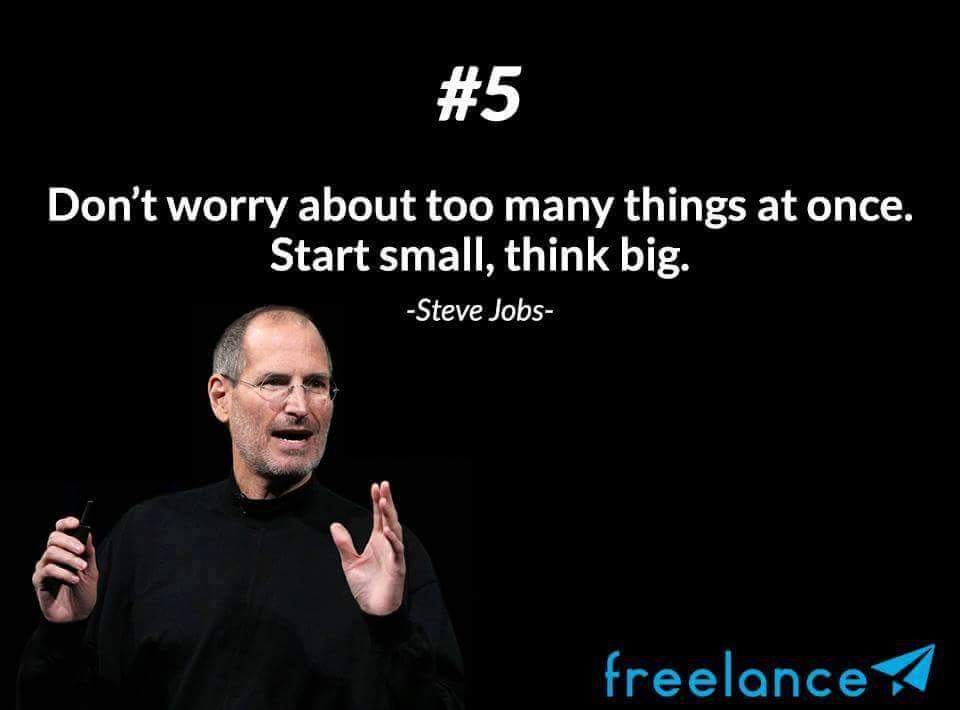
" the moment you begin to loose interest in your job the less productive you will become."
Then i told him, if this company isn't meeting your demands you have a choice to resign and seek for a job somewhere else, because if you continue like this all you will be seeing are the things not going well, when you are giving a job to do you will be reluctant to do the Job and this will bring issues between you and your line manager because you have no drive to work which made you unproductive, hereby making you complain over every little thing.
How you think or feel reflects on your Job performance
where ever you find yourself working and you realize you are no longer driven to work, you find yourself complaining of too much work load, or exchanging words with your boss, you complain about lack of incentive, poor salary and other negative things you weren't seeing before now. STOP AND THINK LOOK BACK TO WHEN YOU STARTED AND ASK YOURSELF IF YOU HAVE GROWN BIGGER THAN THE JOB. and then evaluate your recent status and achievements then you will know if you need a new Job or you need to work on your Personal Effectiveness and Time Management. if you don't you are on the verge of loosing your job sooner than you think.
In conclusion no employer has the right to cage you down in their organization, you have the choice to either re-negotiate your employment if you feel you deserve more, readjust yourself to the current situation to suite you in which you find yourself if you like the work environment or resign.
You must see your place of work as an empowerment place in which you are responsible for the amount of knowledge and experience you gain while you are working there.
You are what you think, and what you think is what directs what you do unconsciously.